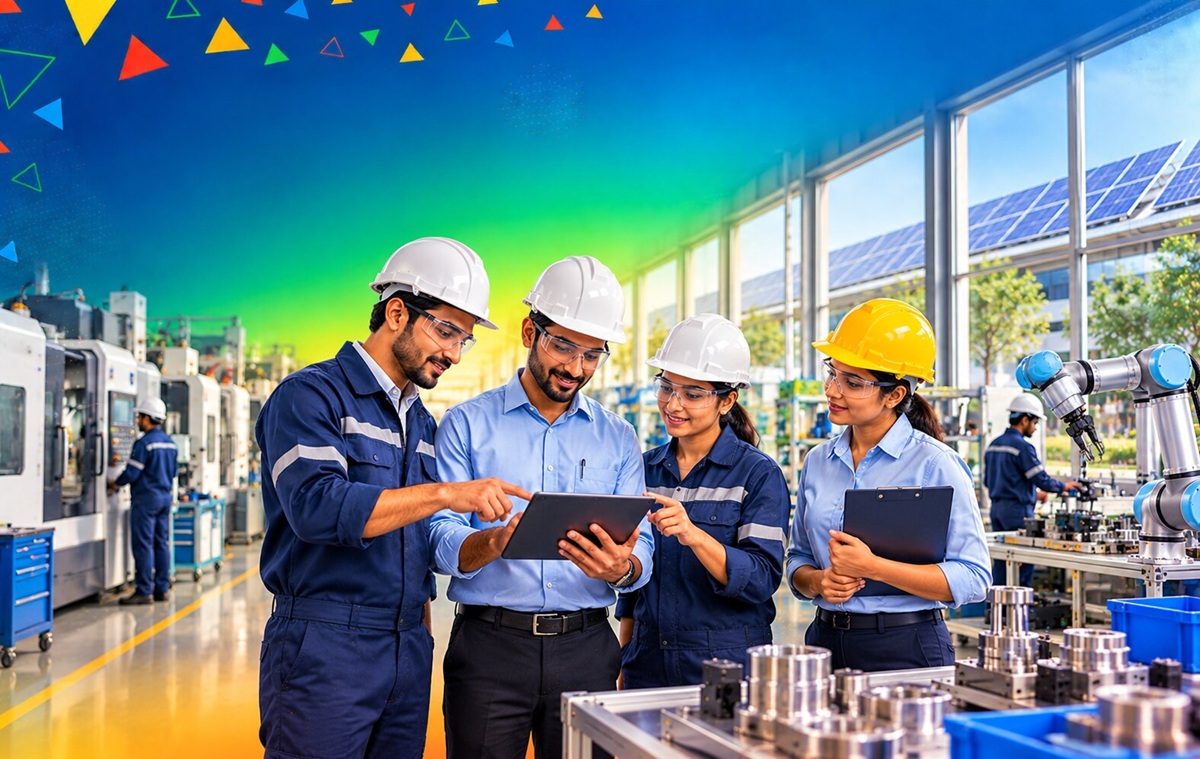
Manufacturing has always evolved with changing technology, business needs, and customer expectations. Today, the focus goes beyond producing more in less time. Businesses are also looking at how to improve quality, support their workforce, and build operations that can adapt to change.
Industry 4.0 transformed factories through automation, data, and connected technology. Now, Industry 5.0 builds on that progress by bringing people back into sharper focus and recognising that human experience and creativity remain important to industrial growth.
But what does this shift from 4.0 to 5.0 mean for manufacturers, and why does the human element matter more than ever? Let’s explore.
A Look Back at Industry 4.0
Industry 4.0, or the Fourth Industrial Revolution, brought smart technologies such as cloud connectivity, artificial intelligence (AI), and real-time data analytics to industry and manufacturing. Machines became connected, systems began sharing data, and automation took over repetitive tasks. These changes helped manufacturers improve quality, reduce errors, and make informed decisions.
The goal was simple: make manufacturing smarter, faster, and more reliable through technology.
How Industry 5.0 Goes Beyond Automation
Industry 5.0, also called the Fifth Industrial Revolution, builds on this digital foundation by improving how people and machines work together. The European Commission describes it as a vision that goes beyond efficiency and productivity, built on three priorities: human-centricity, sustainability, and resilience.
In practice, it combines technology with human creativity, experience, and problem-solving. Alongside productivity, it gives greater importance to worker well-being, sustainability, and resilience, helping businesses create more balanced and future-ready operations.
What’s Really Changing from Industry 4.0 to Industry 5.0?
Here’s a comparison between the two:
| Feature | Industry 4.0 (The Smart Factory) |
Industry 5.0 (The Human Edge) |
|---|---|---|
| Primary Focus | Automation, efficiency, speed, and digital systems. | Human-centred progress. |
| Key Technological Driver | Cyber-physical systems and IoT networks. | Collaborative Robots (Cobots) and Adaptive AI. |
| Role of People | Working with digital systems. | Collaborating with technology. |
| Measure of Success | Productivity and precision. | Productivity, well-being, and sustainability. |
Industry 5.0 doesn’t replace Industry 4.0. It builds on its technological foundation by putting people and long-term impact at the centre.
Why the Human Element Matters in Modern Manufacturing
The human element remains crucial for several reasons:
- Critical Problem-Solving: Human experience brings the agility and judgement needed to resolve sudden, complex errors.
- Stronger Collaboration: People and technology work together to improve both processes and outcomes.
- Safer Workplaces: Employee well-being and safety become priorities alongside productivity.
- Continuous Improvement: Training and skill development help workers adapt as manufacturing evolves.
What This Shift Means for Gujarat’s Manufacturing Sector
For Gujarat’s manufacturing businesses, the shift towards Industry 5.0 creates opportunities to:
- Combine digital tools with workers’ practical experience to improve production.
- Invest in workforce training to help employees adapt to changing technologies.
- Prioritise safer working conditions, resource efficiency, and long-term resilience.
- Encourage collaboration between manufacturers, technology providers, and startups to develop practical solutions.
Building a More Human-Centred Industrial Future
The shift from Industry 4.0 to 5.0 is not about leaving technology behind, but about using it more thoughtfully. For manufacturers in Gujarat, this means balancing productivity with people, sustainability, and resilience.
Platforms like Tech Expo Gujarat give manufacturers the opportunity to exchange ideas, build partnerships, and explore solutions for the next phase of industrial growth.
When human potential meets technological progress, manufacturing moves forward.